How Casino Scenes Shape Public Ideas About Yên Bái
Casino scenes about Yên Bái can shape public impressions; learn to separate their language and claims from current visitor information and local fact.
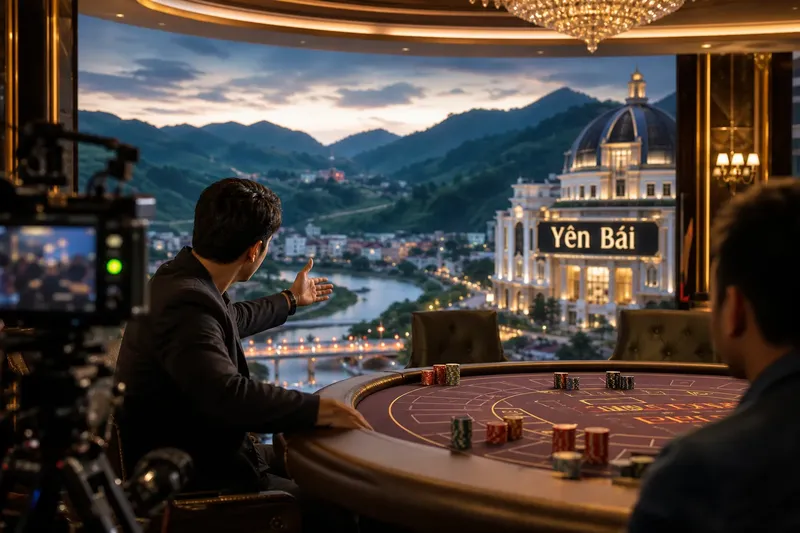
A subtitle names Yên Bái while a character gestures towards a gaming table. Casino scenes about Yên Bái can make the province part of a story, but the wording on screen is not a local directory or a record of residents’ views.
The useful question is what the programme actually says, and who says it. That keeps attention on language and public representation, rather than treating a fictional scene as evidence about the province.
Which words belong to the programme?
Distinguish the spoken dialogue, subtitles, captions and visible signs. A character might name Yên Bái; a subtitle might call a building a casino; a caption might identify a fictional location. Each wording has a source, and each source has limits.
Attribute claims precisely. “The subtitle describes the building as a casino” reports a translation. “The character calls it a casino” reports dialogue. Neither statement establishes a local term or a real venue.
When the distinction matters, consult the original audio and a qualified translator. A subtitle can compress speech, and a place name can be retained, adapted or omitted.
How does a programme present the subject publicly?
Public representation is about the choices a programme makes: which people speak, which labels appear, and whose account is left out. It is not a shortcut to claims about local attitudes.
A presenter may use an authoritative tone, while a character may be boasting or guessing. A caption can look official without being an official local statement. Describe the source and its role before repeating its claim.
If residents do not appear in a scene, say that the programme gives them no voice there. Do not turn that omission into a claim about what residents think.
What should you verify before making a claim?
- Place name: If dialogue or a legible sign names Yên Bái, quote or describe that wording; if neither does, leave the setting unidentified rather than assigning it.
- Speaker: If a character, narrator or caption makes a claim, name that source; if the source is unclear, describe the wording without presenting it as authoritative.
- Translation: If the claim comes from subtitles, identify it as subtitle wording; if the original language matters, seek help from a qualified translator before interpreting it.
- Venue: If a real establishment is named, attribute the claim and seek a current relevant source before treating it as fact; if none is named, do not supply one.
- Date: If the programme gives a date, retain it when summarising; if it gives none, do not present the scene as current visitor information.
- Local views: If residents’ views are directly represented, identify whose views the programme shows; if local voices are absent, avoid claiming to speak for them.
Keep each claim attached to the source that supports it.
How can you describe a scene without speaking for residents?
Separate what appears on screen from what the programme says and what an independent source confirms. This is especially useful when a story borrows a real place name but gives no verifiable details about an actual establishment.
Imagine a fictional scene with a sign reading “Yên Bái”, a character who calls the building a casino, and no venue name or date. First, record the sign’s wording. Next, attribute the building description to the character. Then state that the scene supplies no identifiable establishment or current visitor details. The resulting account can explain how the programme associates a casino setting with Yên Bái while leaving real-world location and status unconfirmed.
That description addresses the programme’s public representation without treating its claims as local fact.
What do readers ask about casino scenes and Yên Bái?
Does a place name on screen identify the filming location?
No. It may identify the story’s setting, not where filming took place. Keep those claims separate unless a suitable production source confirms the filming location.
Can subtitles establish local usage?
No, not by themselves. Subtitles show a translator’s rendering, so describe them as such; consult a qualified translator if a linguistic distinction has real consequences.
Does a programme’s claim establish that a venue is open?
No. Dialogue or a caption is not current visitor information. Check a relevant official or local source for present details, and report only what that source confirms.
How can a description avoid generalising about Yên Bái?
Attach impressions to a particular character, line or editorial choice. A programme can express a viewpoint, but that viewpoint does not represent an entire community.
Where should practical claims come from?
Use a current source suited to the question. A production source might confirm where a programme was filmed; a relevant local or official source is better suited to questions about an actual venue or visitor arrangements. One kind of confirmation does not settle the other.
For searchers looking into casino scenes about Yên Bái, the distinction is simple: describe the programme’s language and public framing, then check practical claims against sources that can actually confirm them. That leaves the story on screen and the real place where they belong.