What a Casino Brochure Can and Cannot Tell You in Yên Bái
Read a casino brochure in Yên Bái with care: separate its visitor details from promotional claims, then know which questions to ask before setting out.
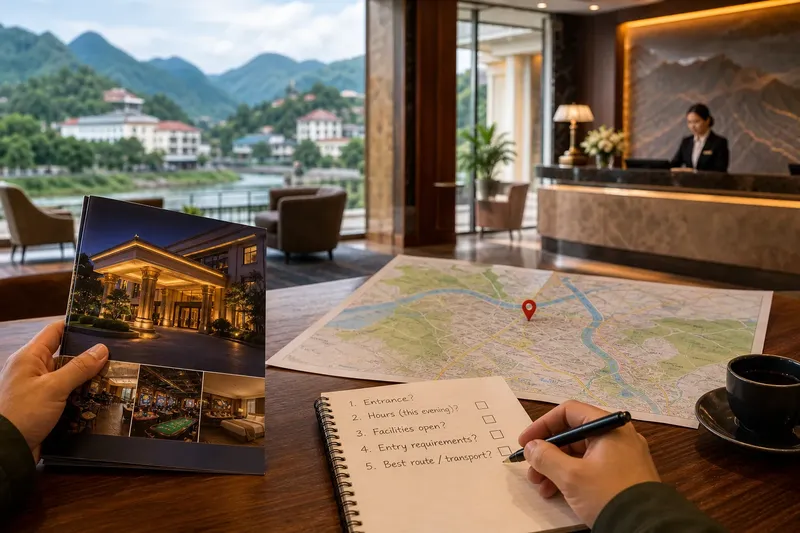
A folded brochure sits beside a hotel reception map, its photograph showing a bright entrance and no road in sight. If you are reading a casino brochure in Yên Bái, treat it first as a piece of publishing: notice who made it, what audience it addresses and which details it actually supplies.
Who is speaking in the brochure?
A property leaflet speaks for the venue’s presentation of itself. A tour operator’s handout may combine a casino with transport, accommodation or attractions. A visitor leaflet may mention a venue in passing without representing it.
Check for a publisher’s name, contact details, issue date and intended audience. These clues help establish the document’s role, but a logo does not establish who maintains every detail. Keep Vietnamese place names in their original spelling when looking up a location; an English translation can blur distinctions.
Notice the language as well as the author. A translated label may group together facilities that have different local names or uses. Record the exact term the brochure uses, then ask what it means if the distinction affects your plans.
Which details can guide a visit?
Look for information that answers a specific visitor question: an address, an entrance, opening arrangements, facilities, contact details or entry conditions. Treat each as a prompt to confirm, not as settled fact. The brochure may describe a venue accurately for the purpose it was made, while still omitting what a visitor needs that day.
- Location: If the brochure gives a street address, compare its spelling with a current map; if it names only a district, ask for the exact destination.
- Access: If it identifies a public entrance, confirm that visitors use it; if it shows only an exterior, ask which entrance is intended.
- Hours: If hours are tied to a named facility and date, confirm they apply to your visit; if they are undated or general, ask about the specific area and day.
- Facilities: If a facility is described plainly, check whether it is currently available; if the wording only sets a mood, do not infer that the service is operating.
- Contact: If a phone number or official contact channel is provided, use it for details the publisher controls; if none is listed, seek a current venue contact before relying on the leaflet.
- Conditions: If entry requirements are stated, confirm they are current; if they are absent, ask the venue rather than assuming a general invitation covers everyone.
Imagine you have a brochure with a venue address but no dated hours, and you plan to visit in the evening. You copy the address, compare its place name with a current map, then contact the venue to ask whether the public area you want is open that evening. If the venue confirms, you have an answer for that specific plan; if it cannot, the leaflet has not settled the question, and you can postpone or seek another current source.
Keep unconfirmed details separate from confirmed ones. A photograph cannot supply a missing entrance name.
What does the brochure’s language leave unsaid?
Words such as “exclusive”, “unforgettable” and “convenient” describe the impression a publisher wants to create. They do not specify access, availability or terms. Translate each into a practical question: where is the entrance, what transport serves it, and which facilities are open to visitors?
“Fine dining” does not say whether a restaurant is operating or takes reservations. “Entertainment” does not identify a schedule or establish that visitors can attend. Ask for the detail behind the phrase instead of treating its tone as information.
Photographs have a similar limit. They may show selected rooms, staged events or a carefully framed view. A caption can identify what is pictured, but an image alone cannot tell you whether the space is open to visitors or available during your visit.
What should you confirm before travelling?
Use the brochure to make a short list of questions, then take each to a source responsible for the answer. Ask the venue about its entrance, facilities and entry arrangements. Check a current local map or transport information for the route, since a property leaflet may not describe the public approach.
Match the address to the place name shown on the map. Check whether the route ends at a public entrance rather than a service road or hotel lobby. If the brochure gives hours without naming the facility they cover, ask about the precise area you intend to visit.
Keep questions narrow. “Is this entrance open to visitors this evening?” is easier to answer than a request for general advice. For arrangements governed by local rules or venue terms, confirm with the relevant source before setting out.
What do readers ask about casino brochures in Yên Bái?
Does a brochure prove that a facility is open?
No. A photograph or facilities list may describe the property without confirming current availability. Ask the venue about the particular facility and intended visit.
Can I rely on brochure opening hours?
Use them as a lead, especially if the leaflet has no issue date. Confirm the hours for the specific area and day with the venue.
Does “nearby” tell me how to get there?
No. It gives a relative impression, not a route. Search for the full place name and check current local directions.
What should I do if sources disagree?
Ask the source responsible for the disputed detail to clarify it, such as the venue about its entry arrangements. Keep a note of what remains uncertain and plan around that uncertainty rather than treating the most convenient version as settled.
What can a brochure say about Yên Bái?
A brochure can show how its publisher wants a casino to be seen: perhaps as part of hospitality, local travel or leisure. That framing is useful evidence about the document’s intended presentation, not a portrait of the town or its residents.
To understand how a venue fits into its surroundings, distinguish the brochure’s own account from local information and other independent descriptions. Each source has a particular scope; a single leaflet cannot speak for everyone who lives nearby.
How should you keep the brochure useful?
Keep it as a record of the questions it raised, not as a complete account of the visit. Mark what you confirmed, what remains unclear and which source supplied each answer. That small distinction makes later updates easier to spot.
For a casino brochure in Yên Bái, the most useful final check is to be able to name your destination, the entrance you intend to use and the source that confirmed the detail. If one of those is missing, you know exactly what to ask before you set off.